


Call Us Now
Phone #1: +86
18206258368Phone #1: +86 18941192030
Author: Site Editor Publish Time: 2026-09-10 Origin: Site

Approving a prototype remains the highest-risk phase of any B2B purchasing cycle. You hold a beautiful prototype in your hands. But this single item does not automatically guarantee mass-production quality. Evaluating samples requires far more than a simple tactile test for softness. You must approach it as a strict audit. You are simultaneously testing manufacturing consistency, material integrity, and supplier reliability. If you skip this deep dive, you risk costly consumer returns. We created this comprehensive guide to help you build a standardized, objective framework for evaluation. You will learn how to test fabric specs and verify construction durability. We also cover how to assess factory communication during this critical phase. By the end, you will know exactly how to protect your brand before you ever commit to mass production.
Material verification must go beyond feel; document exact momme weight, weave density, and colorfastness.
Construction stress-testing (elastic recovery, seam integrity) is critical for minimizing consumer return rates.
The sampling process is an audit of your silk headband supplier's communication, lead time accuracy, and revision handling.
Establishing acceptable defect tolerances on the approved sample is mandatory before signing a bulk purchase agreement.
Factories often make bold claims about fabric grading. They might advertise 6A grade material. They may promise a heavy 22mm fabric instead of a standard 19mm version. You cannot verify these metrics by touch alone. You must cross-reference their claims using physical weight and density checks. Use a precision digital textile scale. Measure a precise square of the material. Calculate its exact momme weight. Grade 6A represents the longest, most pristine fibers available. It should feel incredibly smooth and feature an undeniable natural sheen.
Watch out for "fabric skimming." This deceptive practice occurs frequently during the sampling phase. A factory sends you a premium prototype. However, they secretly downgrade the bulk production run to save money. You can prevent this. Demand documented silk headband specifications on paper. Attach these specs directly to your purchase order so everyone remains accountable.
Here are crucial best practices for material verification:
Request a separate raw fabric swatch alongside the finished product.
Use a textile magnifying glass to count thread density per square inch.
Compare the prototype directly against known, verified fabrics stored in your office.
Delicate dyeing processes require strict oversight. Poorly dyed fabrics bleed heavily. You must wash-test your prototypes immediately. Submerge the item in lukewarm water. Agitate it gently for several minutes. If the water changes color rapidly, you have a major problem. Dye bleeding ruins products worn near hair and facial skin. Consumers will leave terrible reviews if your product stains their expensive pillows or damages their freshly bleached hair.
You also need absolute proof of chemical compliance. Always confirm OEKO-TEX Standard 100 certification. This globally recognized standard guarantees non-toxic dyes. Ask the factory for their official certificate number. Verify it through the official online database. Do not accept expired certificates. Chemical compliance protects your customers from skin irritation. It also shields your business from severe legal liabilities down the road.
A premium silk headband relies on superior internal elastic. Inferior elastic ruins the user experience quickly. You must conduct a 24-hour stretch test. This procedure evaluates the core's physical memory. Stretch the band over a large cylinder. Leave it there for a full day. Remove it and measure the recovery percentage. Cheap elastic warps or loses snap entirely. This defect leads directly to poor customer retention.
You must also compare sizing profiles. Look closely at mini versus mega sizes. Different hair types demand different volumes and tensions. Curly hair requires looser tension compared to straight hair. Compare these dimensions against your target demographic's standard head circumferences. Too tight, and it causes severe headaches. Too loose, and it slips off entirely during sleep.
Follow this numbered stretch-test protocol:
Measure the relaxed circumference flat on a table.
Stretch the band over a rigid form measuring at least 25% wider than the target head size.
Leave the item stretched for exactly 24 hours in a climate-controlled room.
Remove the band and wait exactly one hour.
Measure the final relaxed circumference to calculate any permanent recovery loss.
Turn the prototype inside out. Inspect the internal stitching closely. You want hidden, reinforced seams. You should never see exposed overlock stitching on luxury hair accessories. Exposed threads easily snag delicate hair strands. This causes breakage and customer frustration.
Look for fabric puckering along the elastic channel. Puckering indicates poor machine tension during sewing. It looks messy and highly unprofessional. A highly skilled machine operator sews perfectly smooth, flat channels regardless of the fabric thickness.
Evaluation Area | High-Quality Indicator | Low-Quality Red Flag |
|---|---|---|
Stitching and Seams | Hidden, French seams or tight double-stitched finishing | Exposed overlock, loose threads, uneven spacing |
Elastic Channel Appearance | Smooth material distribution, zero puckering | Uneven bunching, excessively tight thread tension |
Elastic Memory | Snaps back to 98% of original size instantly | Stays visibly stretched out after minimal use |
Sampling tests the physical product. It also tests the business partnership. Track turnaround times meticulously. Log the date you submitted the initial tech pack. Log the exact date the prototype arrives at your desk. Did they meet their estimated timeline? Minor delays happen occasionally. However, massive delays here predict catastrophic delays in mass production.
Assess how the factory handles requests for revisions. Ask for a minor adjustment. A reliable silk headband supplier embraces collaborative problem-solving. They suggest better sewing techniques. A poor factory acts defensive. They might blame your design for their sloppy sewing. Clear, polite, and prompt communication remains a non-negotiable requirement for long-term success. A true manufacturing partner values collaboration over a quick sale. Watch out for evasive answers. If you ask for specific weave density data and they only reply vaguely, treat this as a major red flag.
Never place a mass order after viewing just one prototype. Order a second prototype. Test their reproducibility. You must prove they can duplicate their initial success accurately. A reliable manufacturer will match the first prototype precisely. If the second version looks drastically different, pause immediately. This inconsistency indicates a complete lack of standardized factory procedures. It proves they cannot handle high-volume runs securely.
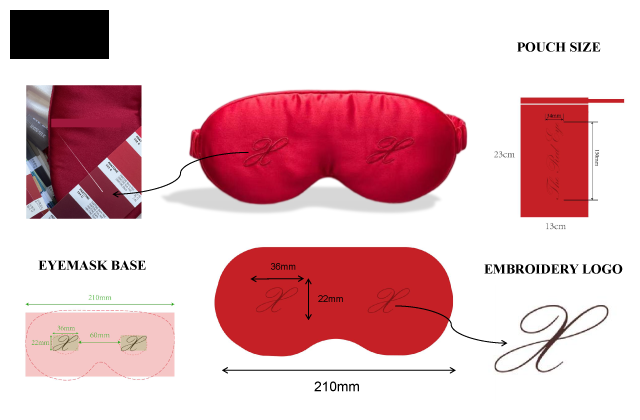
Most brands sell multiple accessory products. You must test how the new item aligns aesthetically with your current catalog. Textures must match seamlessly. Evaluate dye-lot consistency rigorously. Are you bundling items together in a premium gift box? You must ensure exact color matches. For example, customers expect a flawless visual match when pairing the new accessory with a case 3 silk eyemask.
Different materials absorb dye differently. Even identical fabrics from different vats can mismatch noticeably. Compare them under natural daylight. Do not rely solely on office fluorescent lighting. Fluorescent lights hide subtle undertone mismatches easily.
Consider your overall retail presentation. Perhaps this item sits within a broader self-care kit. You might package it alongside exfoliating gloves or specialized facial tools. The textures and packaging must look cohesive. A shiny, ultra-premium hair accessory might clash visually with rustic, natural-fiber bath tools. Ensure the sheen, hand-feel, and perceived value align perfectly across all bundled goods. Cohesion drives perceived brand value upward. When your product line looks disjointed, it breaks the premium illusion. Consistency signals luxury.
Handmade textiles naturally vary. Acknowledge this reality early in negotiations. Achieving 100% uniformity across thousands of units is practically impossible. However, you must dictate limits. Document acceptable tolerances clearly in your final supplier agreement.
For sizing, allow a strict +/- 1cm variance. Set firm limits on minor dye lot shifts using standard AQL frameworks. Provide exact Pantone color codes. Define what constitutes a "pass" or "fail" during third-party inspections. If you do not establish these boundaries, the factory decides them for you.
Metric Category | Acceptable Tolerance Level | Recommended Inspection Method |
|---|---|---|
Sizing (Length and Width) | +/- 1cm from tech pack | Flat table measurement tool |
Color Accuracy | Delta E under 2.0 | Spectrophotometer or Pantone visual check |
Weight (Momme) | +/- 0.5mm variance | Precision digital fabric scale |
Once you achieve the perfect prototype, lock it down immediately. Implement the golden sample protocol. Follow these specific steps carefully to protect your investment:
Request two fully identical final prototypes from the factory.
Inspect both simultaneously to ensure they match each other perfectly.
Sign and date the tags of both items using a permanent marker.
Keep one securely in your office for final QC comparison.
Ship the second one back to the manufacturer.
This signed item becomes the binding reference. It legally defines the standard for your mass shipment. Factory managers use it daily on the production line.
Rigorous prototype evaluation serves as your primary loss-prevention strategy. It goes far beyond a simple aesthetic design check. It protects your capital and preserves your brand reputation. We strongly encourage you to build a standardized QC checklist based on these exact pillars. Test the fabric density, measure the elastic recovery, and demand chemical compliance every single time.
Never rush the prototype phase. Factories might pressure you to finalize orders quickly. Resist this pressure. A rushed approval often leads to unsellable goods. Your immediate next step is clear. Request a comprehensive technical spec sheet alongside any physical prototypes from prospective manufacturers. This documentation holds them accountable. Stay diligent, test thoroughly, and build a lasting partnership built on verified quality.
A: Yes. Paying for custom prototypes is a standard industry practice. Factories use nominal fee structures to filter out unserious buyers. Custom setups require dedicated machine time and labor. Most reliable manufacturers will credit this initial cost toward your final bulk invoice once you place the mass order.
A: Realistic B2B timelines usually range from 7 to 14 days for initial production. You must also factor in international shipping times. Expedited air freight typically adds another 3 to 5 days. Complex custom dyeing or unique hardware requests can extend this timeline significantly.
A: You can perform a simple burn test on a loose thread. Genuine fabric burns slowly, smells like burning hair, and leaves a brittle ash residue. Synthetic polyester melts rapidly, smells like burning plastic, and leaves a hard, uncrushable black bead behind.
