


Call Us Now
Phone #1: +86
18206258368Phone #1: +86 18941192030
Author: Site Editor Publish Time: 2026-10-16 Origin: Site

A custom silk sleep set is a high-ticket investment. People curate these collections for bridal parties, luxury corporate gifting, or personal wellness. You want ultimate comfort and timeless elegance. However, assembling the perfect package requires strict attention to detail.
Pre-packaged sets often compromise on fabric density. They might include filler items you simply do not need. Cheap customization methods can also ruin delicate fabrics entirely. A poorly constructed monogram might pucker the silk. Inferior fabric blends often cause uncomfortable night sweats.
This guide provides a strict evaluation framework for assembling a bespoke sleeping package. We help you select the right components, fabric grades, and customization techniques. Proper selection guarantees maximum longevity and a strong return on your investment. You will learn exactly how to balance luxury aesthetics and practical daily use.
A successful sleepwear package prioritizes utility. You must avoid superficial filler items. Focus instead on garments and accessories designed for nightly use. We recommend splitting your list into primary apparel and high-impact accessories. This approach builds a balanced silk sleeping set.
You must first select the main garments based on the end-user's sleeping environment. Assess the utility of different styles. Cami and short sets work perfectly for hot sleepers. They offer maximum ventilation. Conversely, classic long-sleeve and pant sets provide year-round temperature regulation. Silk naturally adjusts to body heat.
Cut and construction matter immensely. Silk fabrics lack inherent elasticity. Look specifically for French seams. This technique encloses raw edges inside the garment. It prevents fraying over time. Bias cuts represent another critical feature. Garments cut on the bias drape diagonally across the body. This allows for nighttime movement without placing stress on delicate silk fibers.
Accessories elevate the sleep experience. They deliver tangible beauty and wellness benefits. You should always include these core items.
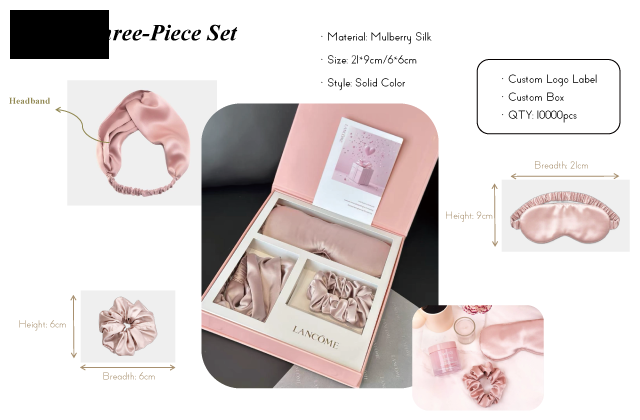
You cannot judge silk merely by its shiny appearance. Durability relies on specific metrics. Fabric weight and fiber grading determine the lifespan of your sleepwear. Understanding these numbers ensures you purchase a high-quality custom silk sleep set.
Momme measures silk density. Higher momme indicates a heavier, denser, and more durable fabric. We classify momme weights to help you choose appropriate applications.
Silk Momme Density Guide
| Momme Weight | Characteristics | Best Application |
|---|---|---|
| 19 mm | Lightweight, semi-sheer, economical. | Budget-conscious summer sets or small hair accessories. |
| 22 mm | Excellent drape, opaque, highly durable. | The optimal baseline for daily-wear custom pajamas and pillowcases. |
| 25+ mm | Ultra-luxurious, heavy, very structured. | Winter wear robes or heavy bedding; potentially too warm for standard sleepwear. |
We consider 19 momme acceptable for lightweight accessories. It works for budget-conscious summer sets. However, 22 momme remains the optimal baseline. It offers the best balance of drape, durability, and opacity. Ultra-luxurious 25+ momme silk feels incredible. Yet, it feels quite heavy. It suits winter wear but becomes potentially too warm for standard nightly use.
Always mandate Grade 6A Mulberry silk. This represents the highest quality available globally. Silk grading evaluates thread uniformity, impurities, and fiber length. Grade 6A utilizes extremely long-strand fibers. These unbroken threads weave together tightly.
This specific long-strand fiber prevents premature pilling. It stops the tearing common in lower-grade blends. Many brands sell cheap silk mixed with synthetic satin. These blends suffocate the skin. They degrade quickly after several washes. Grade 6A Mulberry silk maintains its structural integrity and signature luster.
Sleepwear rests against bare skin for eight hours daily. Chemical safety is completely non-negotiable. Look for OEKO-TEX Standard 100 certification. This globally recognized label guarantees safety. It confirms the fabric and dyes are entirely free from toxic chemicals. It protects you from heavy metals, formaldehyde, and harsh allergens.
Customization transforms standard sleepwear into bespoke luxury. However, applying designs to delicate silk requires specialized techniques. Choosing the wrong method can ruin the garment. You must evaluate the functional differences before placing an order.
Embroidery offers a classic, tactile finish. It works best for gifting, bridal sets, and timeless luxury. However, silk embroidery presents unique manufacturing challenges. The needle punctures the delicate fabric repeatedly.
You must rigorously assess the backing used for embroidery. Poor quality backing causes severe puckering. It shrinks differently than silk during washing. Stiff backing also scratches and irritates bare skin. Placement matters significantly. Restrict embroidery to low-friction areas. Chest pockets, lapels, and cuffs serve as excellent locations. Avoid placing heavy monograms across the mid-back or directly over sensitive skin.
Custom printing allows for unlimited creativity. It works best for highly personalized designs, brand patterns, or photo-centric custom items. You can cover the entire garment in a bespoke pattern. Yet, printing carries specific technical risks.
Always verify the vendor's dye technology. They must use eco-friendly, reactive dyes. Reactive dyes chemically bond to the silk fiber. They penetrate deep into the material. This process retains the fabric's natural breathability and exceptional softness. Conversely, avoid heavy pigment prints. Pigment inks sit on top of the fabric like paint. They create a stiff, plastic-like texture. This completely destroys the silk's luxurious drape.
Sizing custom apparel demands precision. Retail sizing habits often fail when applied to rigid luxury fabrics. A poorly fitted custom silk sleep set quickly becomes unwearable. You must implement strict sizing protocols.
Real silk provides zero give. It does not stretch like cotton or modal blends. We outline the strict necessity of sizing up for sleepwear. Nighttime movement puts immense stress on seams. Tossing and turning in tight silk leads to catastrophic seam blowouts.
Extra room ensures comfort. It allows the fabric to glide smoothly rather than pulling taut across joints.
Buying tailored items for others presents a significant challenge. You rarely have their exact measurements. We suggest prioritizing adjustable components in these scenarios. Drawstring or elastic waists forgive minor sizing errors. Adjustable cami straps accommodate different torso lengths.
Alternatively, heavily lean on one-size accessories. Wrap robes, oversized pillowcases, and contoured masks fit nearly everyone. These items deliver luxury without the stress of exact tailoring.
Custom manufacturing takes time. You must map out realistic timelines. Vendors cannot pull bespoke items straight from a shelf. Bespoke production, printing, and embroidery require careful setup.
These processes typically add one to three weeks to standard fulfillment times. Peak holiday seasons or large bridal party orders push timelines further. Always confirm the final delivery date before authorizing payment. Rush orders on custom silk often lead to sloppy embroidery or rushed dye curing.
Your responsibility does not end at checkout. Protecting the investment requires proper maintenance knowledge. You also need a clear understanding of consumer rights regarding personalized goods.
You must set realistic expectations for the end-user. Silk requires gentle care. High-quality 22 momme silk offers surprising resilience. You can often machine-wash it safely. Use a delicate cold cycle. Always place the garments inside a mesh protective bag. Only use pH-neutral liquid detergent formulated specifically for silk.
Avoid biological detergents containing enzymes. These enzymes dissolve protein-based stains, and silk itself is a protein. They will eat tiny holes into the fabric over time. While machine washing works, hand-washing maximizes the lifespan of custom embroidery. It prevents heavy agitation from loosening delicate monogram threads. Never wring out wet silk. Roll it in a clean towel to extract excess moisture. Always air dry away from direct sunlight.
We must explicitly state a harsh reality. Personalized consumer goods are universally exempt from standard return policies. Vendors cannot resell pajamas bearing your initials. Therefore, all sales are final.
Emphasize the need for rigorous final proofing. Check everything twice before authorizing payment. Spell-check monograms carefully. Ensure dates or custom text contain zero typos. Verify size charts against physical measurements one last time. Address any doubts regarding thread color or fabric weight before the vendor begins production.
Purchasing luxury sleepwear requires a methodical approach. A complete bespoke package should be judged on three main pillars. First, verify the fiber quality. Demand 22 momme, Grade 6A Mulberry silk. Second, prioritize functional component selection. Pair breathable pajamas with high-impact accessories like pure-filled eye masks. Third, insist on safe customization methods like reactive printing or skin-friendly embroidery backing.
Take action today by finalizing your specific component list. Reach out to prospective vendors and request their OEKO-TEX fabric certifications. Once you verify their quality standards and sizing charts, confidently proceed to design your personalized set. This careful preparation guarantees a beautiful, long-lasting investment in nightly wellness.
A: 19mm is acceptable for extreme budget items or very lightweight summer pieces. However, 22mm remains the strict industry standard. It provides the necessary durability, opacity, and drape required for daily-use sleepwear.
A: Yes, conditionally. You must use cold water, a delicate cycle, a pH-neutral detergent, and a protective mesh garment bag. Keep in mind, hand-washing remains the safest method to protect delicate embroidery threads from loosening.
A: No. Silk is a natural, breathable protein fiber spun by silkworms. Satin refers merely to a weave type. Most commercial satin consists of suffocating synthetic polyesters that trap body heat and irritate the skin.
A: Timelines vary significantly by vendor. Customization usually adds 1-3 weeks to standard shipping times. This depends heavily on whether you choose simple monogramming or complex, full-fabric bespoke printing.
