


Call Us Now
Phone #1: +86
18206258368Phone #1: +86 18941192030
Author: Site Editor Publish Time: 2026-10-08 Origin: Site

The resurgence of "coquette" and vintage-inspired aesthetics has heavily influenced modern bedroom styling. Consumers actively hunt for romantic, textured bedding options. This rapid shift in consumer preference has made the ruffled design a high-demand product. Boutique brands and enterprise bedding collections alike scramble to secure these items.
While the design appeals to buyers seeking feminine bedroom styling, ruffles introduce strict manufacturing complexities. Poor fabric choices easily lead to collapsing trims and severe fraying. Weak stitching causes seams to unravel after a single wash. These defects generate high return rates. They ruin brand reputation quickly and drain profitability.
We provide a clinical framework for bedding brand managers and retail buyers. You will learn to evaluate material viability effectively. We will help you mitigate manufacturing risks before production begins. You will also learn to audit potential manufacturing partners. This ensures you deliver a durable, premium product to your customers.
The material dictates your product margin directly. It also defines your manufacturing difficulty. Consumers driving this trend heavily scrutinize fabric quality. They aggressively avoid cheap microfiber. Microfiber traps heat and feels abrasive against the skin. Buyers expect natural, breathable fibers instead. You must select fabrics carefully. The wrong choice ruins the drape entirely.
Linen and cotton percale represent the structural choice. They offer high breathability and natural stiffness. These fabrics hold a ruffle's shape exceptionally well. You rarely need heavy interfacing. This keeps your production costs reasonable. However, you must verify pre-washing treatments. Differential shrinkage destroys the final product. The main body and the trim must shrink evenly. If they do not, severe puckering occurs. Ask your factory for detailed shrinkage test reports. They must prove fabric stability before cutting.
Silk represents the premium tier for bedding collections. It offers a high retail margin. Strong consumer demand exists for its hair and skin benefits. However, integrating a silk pillowcase with a ruffled edge requires specialized handling. Silk slips easily during production. It is highly prone to seam slippage. The delicate fibers pull apart under tension. Your factory must use French seams. Reinforced binding is another acceptable method. These techniques prevent tearing where the ruffle meets the main body. They ensure the product survives daily use.
Vague design briefs lead to inconsistent production runs. Factories cannot guess your design intentions. You must specify exact mechanical tolerances. A detailed tech pack eliminates costly errors. It translates your vision into actionable data for the sewing floor. Provide exact measurements for every component.
Define the gather ratio clearly in your documents. It typically spans 1.5x to 2x the perimeter length. A lower ratio looks flat and unimpressive. A higher ratio increases fabric consumption significantly. This pushes your unit cost up fast. Standard ruffle widths range from 2 to 4 inches. You must specify the exact drop length. Do not leave this open to factory interpretation.
Edge finishing defines the perceived value of the product. Require baby hems for a clean aesthetic. Narrow rolled hems also work beautifully. You must avoid overlocked edges on premium SKUs. Serged edges look incredibly cheap. They degrade the product value entirely. They also unravel easily during consumer laundering. Rolled hems take more labor time. However, they deliver a luxurious, durable finish.
Fabric Gather Ratio Specifications
| Gather Ratio | Visual Effect | Fabric Consumption | Best Suited For |
|---|---|---|---|
| 1.25x | Very subtle, almost flat wave | Low | Minimalist linen collections |
| 1.5x | Standard wave, balanced look | Medium | Everyday cotton percale lines |
| 2.0x | Luxurious, dense volume | High | Premium silk and vintage collections |
| 2.5x | Theatrical, heavy folds | Very High | Custom boutique orders only |
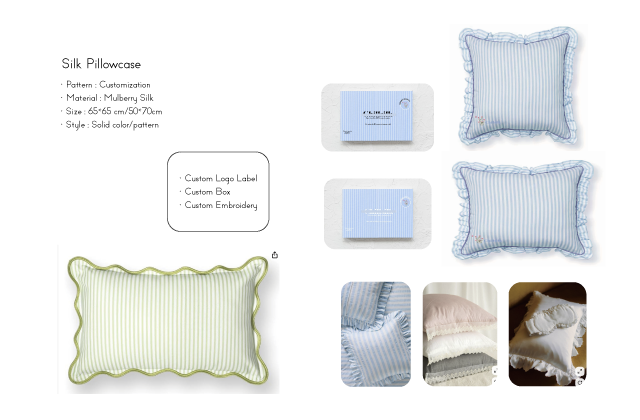
Evaluate their portfolio of complex trims carefully. A standard flat-sheet factory usually fails here. They lack specialized folders on their sewing machines. They also lack the right gathering attachments. Consistent ruffle gathering requires specific industrial hardware. Ask to see previous production runs. Look closely for uniform pleats along the edges.
You must require strict environmental and safety certifications. OEKO-TEX Standard 100 certification remains mandatory. This guarantees the use of non-toxic dyes. It remains critical for bedding products. A ruffle pillowcase sits against the skin for eight hours every night. Chemical safety cannot be ignored. Consumers demand transparency regarding material safety. Request to see their valid certification numbers.
Determine if their Minimum Order Quantities align well with your strategy. Premium materials often require lower initial MOQs. However, they have higher minimum fabric dyeing thresholds. Discuss these limits early in negotiations. You do not want surprise dye-lot fees later. An experienced ruffle pillowcase supplier will explain their fabric yield requirements clearly.
Ruffles often look crisp in packaging initially. However, they collapse completely after one wash. We call this the "floppy ruffle" syndrome. You must mandate wash-testing during the sampling phase. For softer fabrics, evaluate hidden interfacing. Lightweight interfacing at the seam base works wonders. It gives the base necessary structural integrity. It prevents the fabric from drooping downward permanently. It keeps the aesthetic intact.
Improper machine tension causes severe seam puckering. The main pillowcase body puckers exactly at the seam. This happens where it meets the gathered fabric. You must inspect stitch density on pre-production samples. Demand a minimum of 10-12 stitches per inch. High SPI ensures structural integrity. It distributes the seam tension evenly. It prevents the fabric from bunching up. Lower stitch counts lead to burst seams.
Thread selection also plays a crucial role. Do not let factories use cheap cotton threads on high-tension seams. Demand polyester-core threads for maximum durability. They offer superior tensile strength. They resist snapping when consumers stretch the pillowcase over a heavy insert. Quality control must check for thread snapping.
Manufacturing Risk Mitigation Strategies
| Identified Risk | Root Cause | Preventative Action |
|---|---|---|
| Edge Fraying | Serged or raw edges left exposed | Mandate baby hems or narrow rolled hems in the tech pack. |
| Seam Puckering | Uneven fabric shrinkage post-wash | Require pre-washing of all fabrics before the cutting process. |
| Inconsistent Gathers | Manual pleating by operators | Audit factory for automated gathering machine attachments. |
| Crushed Presentation | Vacuum sealing products too tightly | Use rigid cardboard inserts and avoid deep vacuum sealing. |
Request an existing stock sample first. Do this before paying for custom prototypes. Assess their baseline construction skills immediately. Look at the corners specifically. The corners show true craftsmanship. Poor factories bunch up the fabric at a 90-degree angle. This saves you money and valuable time. If their stock sample fails, move on immediately.
Subject the prototype to strict performance testing. Use three standard commercial wash-and-dry cycles. Measure the item for differential shrinkage. Use a ruler to check the dimensions before and after laundering. Look closely for any edge fraying. Check the colorfastness under harsh lighting. Silk requires delicate cycle testing. Linen requires heavy agitation testing.
Weight your supplier choice carefully. Follow a strict final decision matrix. Do not base your decision on unit cost alone. Cheap production often leads to expensive returns. A reliable partner saves you money in the long run.
Adding ruffled aesthetics to a bedding line remains a strategic move. It helps capture market share in the boutique home goods sector. Consumers willingly pay a premium for vintage-inspired, romantic designs. This trend shows no signs of slowing down.
However, the transition from design mood board to viable product requires an evidence-based approach. You must prioritize manufacturing partners wisely. Define your technical specifications clearly. Mandate strict edge-finishing techniques. Insist on rigorous wash-testing during the sampling phase.
Choose factories that understand the tension between delicate aesthetics and robust wash-and-wear durability. Execute careful audits. Demand high-density stitching. By applying these strict criteria, you protect your brand reputation. You ensure a beautiful, long-lasting product that drives repeat business.
A: Most premium suppliers recommend a 1.5x to 2x ratio. A 2x ratio provides a luxurious, full gather but requires double the fabric for the trim, directly impacting the Bill of Materials (BOM) cost.
A: Yes, but it requires a supplier experienced in silk handling. They must utilize rolled hems and secure the ruffle to the body with reinforced French seams to prevent the delicate fibers from pulling apart under tension.
A: A reliable QC report for ruffled bedding should specifically note pull-testing results on the seams, differential shrinkage percentages after laundering, and stitch tension consistency along the gathered edge.
