


Call Us Now
Phone #1: +86
18206258368Phone #1: +86 18941192030
Author: Site Editor Publish Time: 2026-09-23 Origin: Site

Expanding a bath and body care line requires moving beyond generic white-label products. You need thoughtfully specified accessories matching your brand's rigorous quality standards. Consumer expectations have dramatically shifted over recent years. Buyers now fiercely scrutinize product materials before purchasing. They actively seek out plastic-free, machine-washable options for their daily routines.
Consumers increasingly search for non-chemical solutions to manage keratosis pilaris. This condition, commonly known as "strawberry skin," drives massive demand for physical exfoliants. Successfully launching a custom collection requires careful strategy and deep market understanding. You must balance unit economics against material durability, supplier reliability, and accurate market positioning.
This guide outlines the exact criteria for evaluating and shortlisting reliable OEM partners. You will learn how to specify materials accurately. You will discover how to customize designs effectively for maximum user satisfaction. Finally, you will understand how to ensure full regulatory compliance. Read on to master the complexities of modern product sourcing.
Body scrubs and chemical exfoliants require complementary physical tools. Selling these accessories offers a high-margin, high-retention add-on. They work perfectly for direct-to-consumer (DTC) brands and premium spas. Many brands focus solely on consumable liquids or scrubs. They completely ignore the physical applicator. This oversight leaves significant revenue on the table.
DTC brands spend heavily to acquire a new customer. Offering a premium accessory increases the average order value instantly. This simple addition offsets rising advertising costs. Modern buyers actively reject single-use plastics and harsh abrasives. Your product positioning must address specific, tangible consumer concerns. Excellent examples include pre-fake-tan skin preparation or ingrown hair prevention. You must deliver verifiable product performance to build trust.
A successful launch of private label exfoliating gloves achieves a distinctly low return rate. It generates overwhelmingly positive customer reviews focusing on durability. Buyers specifically praise machine washability as a key benefit. Finally, a successful launch secures healthy profit margins at your target retail price. You want a product people use weekly and replace quarterly. This builds a reliable, recurring revenue stream. They turn a basic shower routine into a spa-like ritual.
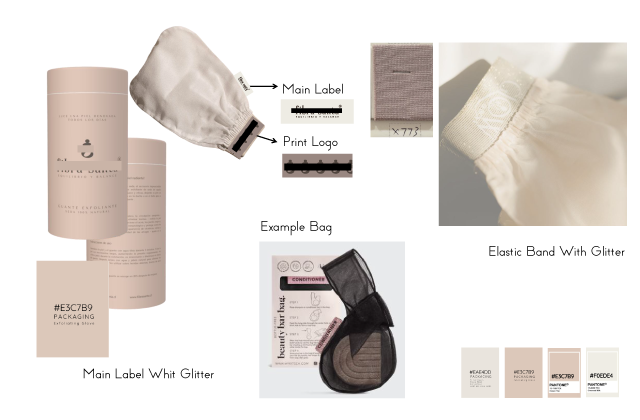
Choosing the right fabric defines your product's market fit. We categorize materials into three main groups. Each offers distinct advantages and specific supply chain risks. You must match the material carefully to your brand identity.
Plant-Based Viscose (Rayon/Bamboo):
This material represents a high industry standard. It remains highly biodegradable when disposed of properly. Plant-derived fibers hold water well. They expand slightly, creating a perfect texture for lifting dead skin cells visibly. Consumers love seeing immediate results in the shower. However, viscose introduces specific manufacturing risks. It shrinks easily if not pre-washed during production. You must specify pre-shrinking protocols clearly. Ask your manufacturer about their fabric finishing processes.
Raw Turkish Silk (Peshtemal):
Silk offers ultimate premium positioning. It feels ultra-gentle for highly sensitive skin types. It naturally possesses beneficial hypoallergenic properties. Many luxury spa brands choose exfoliating gloves made from raw silk. The weave catches dry, flaky skin without aggressive abrasion. However, silk carries a noticeably higher unit cost. It fails to meet vegan standards. Cruelty-free claims require strict supply chain audits. You must verify how suppliers harvest the silk threads.
Synthetics (Nylon/Polyester):
These synthetic materials cost very little to produce. They boast high durability and extremely fast-drying properties. Gym-goers often prefer them for convenience. Yet, they misalign with growing "plastic-free living" consumer trends. They also risk shedding harmful microplastics into local waterways. Environmental advocates frequently criticize brands using these plastics.
Evaluation Dimension:
Always request material safety data sheets (MSDS) upfront. Secure origin certificates early in the sourcing process. These legal documents back up your marketing claims. Never rely on verbal promises from overseas suppliers. Demand documented proof of material composition.
| Material Type | Primary Pros | Supply Chain Risks | Ideal Brand Positioning |
|---|---|---|---|
| Plant-Based Viscose | Biodegradable, visible exfoliation | High shrinkage if not pre-washed | Eco-conscious, results-driven DTC |
| Raw Turkish Silk | Hypoallergenic, ultra-gentle | High cost, non-vegan auditing | Luxury spa, sensitive skin care |
| Synthetic Blends | Low cost, highly durable | Microplastic shedding, bad PR | Budget retail, travel convenience |
True differentiation extends far beyond slapping a logo on a generic product. You must engineer the user experience meticulously from start to finish.
Weave Coarseness & Texture Grading:
Weave coarseness requires careful specification. You must specify the exact denier and weave structure. Denier refers to the thickness of the individual fibers. A higher denier results in a rougher, more aggressive scrub. Consider offering tiered options to your customers. A "Gentle" version suits daily use perfectly. A "Deep Polish" version handles weekly intensive treatments. Educating your customer on texture grades builds immense brand authority.
Structural Integrity:
Focus heavily on the wristband construction. Evaluate the elastic quality rigorously before approving designs. Cheap elastic degrades rapidly after multiple hot-water washes. Once the elastic fails, the glove slips off during use. The hanging loop remains essential for drying and hygiene. Manufacturers must reinforce this loop with double stitching. A torn loop leads to moldy products and bad reviews. We frequently see brands fail because they ignored seam allowances. Specify a minimum of five stitches per centimeter.
Branding & Packaging Interventions:
Choose your branding format wisely. A woven tag insertion looks far more premium than stamped logos. You can sew your brand name directly into the seam. This ensures your logo remains visible for the lifespan of the product. Packaging choices also define your brand ethos. Retail-ready packaging includes FSC-certified paper sleeves. You might choose recycled cardboard tubes or compostable pouches. These outperform cheap bulk polybags in consumer perception. Custom exfoliating gloves packaged thoughtfully command higher retail prices. Consumers unbox these products with a true sense of luxury.
Vetting partners correctly prevents disastrous product launches. You must differentiate clearly between turnkey solutions and custom OEM partners.
Turnkey Solutions vs. Custom OEM:
Turnkey suppliers offer off-the-shelf white labeling. This route provides a much faster time-to-market. It requires minimal design input from your team. Conversely, custom OEM partners allow ground-up structural changes. This route ensures significantly higher market differentiation. You dictate the exact weave, color, and trim. Decide which path aligns with your current launch timeline.
Evaluating MOQs and Scalability:
Standard entry Minimum Order Quantities (MOQs) often range between 500 and 1,000 units. Assess their scaling capabilities for high-volume retail. A supplier handling 500 units easily might fail at 50,000 units. Always ask about tiered pricing structures. Costs should drop predictably as your order volumes increase. Request a comprehensive pricing matrix covering up to 10,000 units.
The Sampling & QA Process:
Never skip the prototyping phase under any circumstances. Rushing to production guarantees expensive mistakes. You must stress-test the sample thoroughly. Follow this strict evaluation framework:
Lead Times & Supply Chain Risks:
Factor in manufacturing time accurately. Custom production typically takes 30 to 45 days. Add freight time (air versus sea) to this estimate. Sea freight often adds another 30 to 40 days. Language barriers and time zone differences complicate overseas sourcing. Prioritize suppliers who communicate clearly and promptly. This buffer ensures uninterrupted inventory for your storefront.
Profitability demands precise financial calculations. You cannot scale a sustainable brand on vague assumptions.
Cost-to-Outcome Ratio:
Calculate your true landed costs meticulously. This calculation includes manufacturing, shipping, tariffs, and packaging. Do not forget to add warehouse receiving fees. Let us examine a basic landed cost scenario. If the unit costs $1.50 to manufacture, freight might add $0.50 per unit. Customs duties could add another $0.20. Your true landed cost becomes $2.20. Ensure the retail markup supports your customer acquisition cost (CAC). If your CAC exceeds your gross margin, you lose money quickly.
Regulatory & Marketing Compliance:
Consumers scrutinize brand promises heavily today. Greenwashing destroys brand equity instantly. Ensure any "biodegradable," "organic," or "cruelty-free" claims carry legal backing. Demand recognized supplier certifications. The Global Organic Textile Standard (GOTS) tracks the entire supply chain. OEKO-TEX certification proves the fabric contains no toxic dyes. Keep these certificates on file permanently.
Avoid making exaggerated medical claims entirely. Stick purely to cosmetic benefits. You can claim the product smooths skin. You can claim it preps skin for tanning. Do not claim it cures medical conditions like eczema. Overpromising invites regulatory scrutiny from consumer protection agencies. It ruins customer trust permanently. We highly recommend having a legal consultant review your packaging copy.
Launching a profitable accessory line requires calculated decision-making. You must approach physical products with extreme attention to detail. Choose your material based strictly on your brand's core values. A zero-waste brand needs different materials than a luxury spa line. Next, shortlist two to three reliable suppliers. They must meet your MOQs and customization needs seamlessly. Compare their communication speed and sample quality closely.
As a next-step action, request a comprehensive sample kit from prospective suppliers. Include variations in weave texture and packaging prototypes. Test these extensively in real-world shower conditions. Do this long before initiating a full pilot run. Taking these methodical steps protects your investment. It ensures your brand delivers exceptional quality to every customer.
A: MOQs vary significantly by supplier. White-label or turnkey stock often starts at 100 to 500 units. If you require fully custom weaves and bespoke dyed colors, expect higher commitments. These typically require 1,000 to 3,000 units to begin production.
A: Yes, but you must rigorously test this during the sampling phase. Natural fibers like viscose will shrink slightly after washing. You must specify pre-shrunk materials from your manufacturer if washability serves as a core marketing pillar for your brand.
A: It generally takes 8 to 12 weeks from start to finish. This timeline includes 2 to 3 weeks for sampling and revisions. Production requires 30 to 45 days. The remaining time accounts for freight transit and customs clearance procedures.
A: Synthetics definitely yield a lower unit cost upfront. However, natural materials like viscose and silk allow for premium retail pricing. They align much better with modern consumer preferences. This strategic alignment often results in higher lifetime value and stronger brand loyalty.
