


Call Us Now
Phone #1: +86
18206258368Phone #1: +86 18941192030
Author: Site Editor Publish Time: 2026-09-26 Origin: Site

For procurement and brand managers, packaging a beauty accessory set is a complex balancing act. It requires merging premium unboxing aesthetics with rigorous structural protection. Accessory bundles often combine wildly distinct materials in one box. You might pair fragile jade rollers, delicate makeup brushes, or sensitive silk fabrics together. These unique combinations demand multi-layered defense mechanisms. They must survive external transit shock, internal moisture buildup, and long-term chemical degradation. A single shattered glass vial or crushed sponge can ruin the entire customer experience. This guide breaks down how to systematically evaluate protective packaging materials. We explore how to define precise technical requirements and thoroughly vet manufacturing partners. You will learn actionable strategies to ensure your products arrive perfectly intact. We also show you how to achieve this high level of protection without unnecessarily inflating dimensional weight shipping costs.
Protective packaging for a beauty accessory set must address both external transit shock and internal component abrasion.
Defining exact beauty accessory set specifications—including insert tolerances and material chemical stability—prevents high defect rates.
Selecting the right beauty accessory set supplier requires evaluating their prototyping capabilities, ISTA transit testing standards, and compliance with sustainability mandates.
Trade-offs exist between premium rigid structures and scalable, eco-friendly flexible alternatives; material selection must align with SKU margins.
Brands often underestimate the harsh realities of global logistics. Beauty tools face intense physical stress from the factory floor to the consumer's vanity. Transit vulnerability represents a massive threat to your bottom line. Goods endure constant vibration during B2B pallet transport. They also suffer rough handling, drops, and weather exposure during B2C last-mile delivery. Pallet stacking can crush weak outer cartons. Courier sorting machines can easily bend or fracture unprotected inner contents.
We must also address the internal component clash risk. A unified set often places hard objects right next to soft objects. Consider a kit pairing heavy metal tweezers with porous sponge blenders. If you lack proper internal isolation, items collide and damage each other. The tweezers will tear the sponge or scratch adjacent plastic compacts. Micro-scratches on premium acrylic handles instantly degrade the product's perceived value.
Damaged packaging directly correlates with increased return rates. It erodes brand trust. Consumers expect pristine condition upon unboxing. This expectation peaks in the premium gifting and holiday kit categories. When a customer buys a luxury kit as a gift, a dented corner or scuffed tool leads to an immediate return. Prioritizing protection safeguards your product margins. It prevents costly reverse logistics and negative online reviews.
Conduct drop tests at the component level before finalizing the outer box size.
Isolate heavy items using rigid cavities to prevent internal migration.
Apply protective peel-off films on high-gloss tools during assembly.
Selecting the right exterior shell and internal cavity dictates structural success. You must weigh physical strength against shipping volume. We categorize these choices into rigid setups, folding cartons, and internal inserts.
Rigid Setup Boxes (Thick Chipboard)
Rigid boxes utilize dense chipboard, typically ranging from 800 GSM to 1200 GSM. They offer maximum crush resistance. Consumers heavily associate rigid boxes with premium gifting and high perceived value. However, they ship fully assembled. This drastically increases shipping volume and warehouse storage space. You face a higher unit cost and inflated freight expenses.
Folding Cartons (SBS Paperboard)
Folding cartons use Solid Bleached Sulfate (SBS) paperboard. They ship flat, making them highly scalable and lightweight. You can apply highly customizable printing, embossing, and foil stamping easily. The drawback is lower inherent crush resistance. You absolutely require robust internal inserts to protect heavier accessories from collapsing the outer walls.
Protective Inserts (The Critical Layer)
The insert actually holds the items secure. It absorbs shock and isolates materials.
Molded Pulp: Highly sustainable. It provides excellent shock absorption. However, it demands higher upfront tooling costs for custom molds.
Die-Cut Foam (EVA/PU): Offers a precise fit for complex, organic shapes. High-density EVA delivers incredible drop protection. Unfortunately, foam faces increasing environmental compliance scrutiny from major retailers.
Thermoformed PET Trays: Very cost-effective at high volumes. They provide a secure snap-fit for components. PET is highly recyclable, appealing to eco-conscious buyers.
Application Scenario
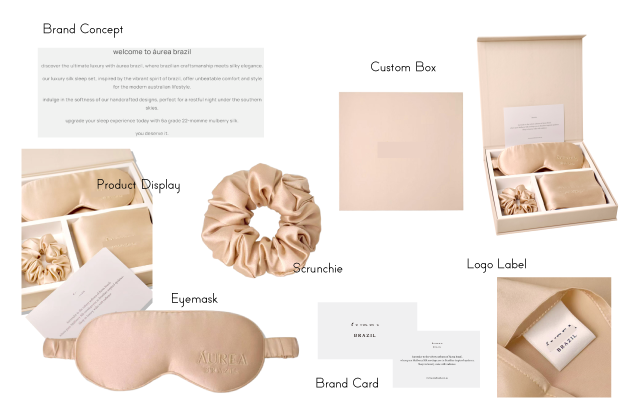
Consider a mixed-material sleep collection. When protecting a case 1 sleeping set, you face unique challenges. The bundle might include a delicate silk eye mask, soft fabric scrunchies, and a heavy glass sleep-serum vial. The packaging must feature moisture-resistant barriers to keep fabrics pristine. It also requires non-abrasive custom cavities to prevent fabric snagging and vial breakage. A velvet-flocked PET tray serves this scenario perfectly. It holds the heavy glass tight while protecting the silk from sharp tray edges.
Material Type | Primary Advantage | Primary Disadvantage | Best Application |
|---|---|---|---|
Thick Chipboard | Superior crush resistance | High freight volume | Premium luxury gifting |
SBS Paperboard | Flat shipping, low weight | Prone to corner denting | Retail shelf standard kits |
EVA Foam | Precise friction fit | Poor eco-friendliness | Heavy metal beauty tools |
Molded Pulp | High sustainability profile | Expensive mold tooling | Eco-conscious brand lines |
Vague instructions lead to catastrophic manufacturing errors. You must outline technical requirements down to the millimeter. Leaving details to interpretation guarantees inconsistent production batches.
Dimensional Tolerances
Specifications must dictate exact cavity depths for all internal inserts. A tolerance deviation of just >2mm can result in accessories dislodging during transit. If a jade roller pops out of its tray, it will smash against the box lid. Define strict +/- 1mm thresholds for die-cut foams and thermoformed plastics.
Chemical Stability
Packaging materials must not react with residual cosmetic formulations. Some applicator sponges or brushes may carry trace oils or cleaning solvents. These chemicals can melt or warp cheap plastics. You should request migration testing data for plastics like PET or PP. Ensure the tray material resists degrading upon contact with essential oils or squalane.
Closure Mechanisms
A strong box means nothing if it pops open upon impact. Evaluate different closure mechanisms carefully. Magnetic closures offer a premium feel. Friction-fit lids work well for rigid cylinders. Tamper-evident seals provide hygiene security. The closure must withstand standard 3-foot drop testing without bursting open. If you use magnets, specify the exact gauss rating (magnetic strength) required.
Documentation
Finalizing your beauty accessory set specifications should culminate in a formal tech pack. This document acts as your blueprint. A comprehensive tech pack prevents miscommunication with overseas factories.
Your tech pack must include:
Detailed CAD structural files showing all dimensions and fold lines.
Specific GSM (grams per square meter) requirements for every paper component.
Pantone color codes for all printed assets.
Exact coating finishes, such as anti-scratch matte lamination or spot UV gloss.
Assembly instructions showing how operators should load the tools into the trays.
Many brands fail to account for the thickness of the coating finish when designing insert cavities. A heavy matte lamination adds microscopic bulk. If your tray fit is already extremely tight, the added lamination can make inserting the tools physically impossible on the assembly line.
Moving from a beautiful prototype to mass production introduces significant hurdles. You must balance protective capabilities with real-world logistical costs and retail rules.
Tooling and Lead Times
Custom inserts require bespoke molds. You cannot rush this process. Factor in 3 to 5 weeks for mold creation and sample iteration. You will likely need to adjust the mold slightly after the first test fit. Foam inserts require cutting dies, while pulp requires expensive metal meshes. You must finalize the physical dimensions of your beauty tools before starting the packaging molds. Changing a tool's handle size mid-production renders the packaging mold completely useless.
Dimensional Weight (DIM) Costs
Over-engineering protection leads to bulky packaging. Shipping carriers charge based on Dimensional Weight, not just actual weight. They calculate DIM by multiplying Length, Width, and Height, then dividing by a standard divisor. If your box contains too much dead space, you pay to ship air. Evaluate the cost-to-protection ratio. Optimize your CAD designs to nest tools closer together. Reducing the box size by just one inch can save thousands in freight fees over a single year.
Sustainability Compliance
Retail vendor guidelines evolve rapidly. Major retailers now penalize brands for using non-recyclable materials. You must shift away from mixed-material packaging. Fusing plastic windows to paperboard makes the entire box impossible to recycle. Specify FSC-certified papers. Use mono-material plastics where feasible. For example, if you use a PET tray, ensure the outer carton uses zero plastic lamination. This allows the consumer to easily separate and recycle both components.
A brilliant structural design fails if your manufacturing partner lacks precision. You must audit factories based on their testing rigor, not just their pricing.
Prototyping & Sampling
Never skip the structural sample phase. A qualified beauty accessory set supplier should provide unprinted "dummy" samples first. These white mockups let you perform drop and fit testing immediately. Load your actual products into the dummy sample. Shake it vigorously. If you hear rattling, the tolerances are too loose. Do not approve printed color samples until the structural dummy passes all physical abuse tests.
Testing Certifications
Demand suppliers who conduct or facilitate formal transit testing. The International Safe Transit Association (ISTA) provides standard protocols. Look for ISTA 1A (non-simulation integrity performance) or ISTA 3A (parcel delivery system simulation). These tests put the package through standardized drops, vibration tables, and compression forces. Working with a factory that understands ISTA standards validates your protective claims with empirical data.
Capacity & MOQs
Verify if the factory's Minimum Order Quantities (MOQs) align with your business stage. A pilot launch might need only 1,000 units. A scale-up phase might demand 50,000 units. Assess their ability to scale rapidly during holiday-season demand spikes. A factory that handles small batches beautifully might completely fail when pressured by November deadlines.
Vertical Integration
Look for vertical integration. Suppliers who handle both the outer box printing and the internal tray thermoforming in-house offer major advantages. They reduce alignment errors. If the tray and box come from two different factories, they rarely fit perfectly. In-house production shortens lead times and provides a single point of accountability if quality issues arise.
Protecting a diverse collection of beauty tools requires intense preparation. It goes far beyond simply choosing a sturdy exterior box. You must engineer internal cavities meticulously to isolate fragile components. You must also ensure material compatibility so plastics and chemical formulations do not interact negatively.
Take time to define rigorous technical tolerances in your tech pack. Partner exclusively with manufacturing partners capable of verifiable ISTA transit testing. By balancing structural strength with efficient dimensional sizing, you protect your products and your profit margins. Following these steps eliminates transit damage, slashes retail return rates, and preserves the premium unboxing experience your customers expect.
A: High-density EVA foam or custom-engineered molded pulp offer the best shock absorption for heavy items like metal gua shas or glass components. They restrict internal movement entirely and absorb heavy impact force.
A: Specifications dictate the final volumetric footprint. Efficient CAD design minimizes dead space, directly lowering Dimensional Weight (DIM) shipping fees. Tighter layouts mean smaller boxes, which drastically cuts freight charges.
A: Test for exact component fit with zero rattling. Verify structural integrity after a standard drop test. Finally, ensure the smooth functionality of the closure mechanism, checking that it does not pop open upon impact.
